

Welcome back, Lanzothians!
Week 3 of the blog, is erm, rather late. I planned to update the blog every Saturday, but of course, it slipped from my fingers this past weekend. I’m debating on whether I’d like publish new posts on Saturday’s or Sunday’s for the prior week. I suppose I’ll make a more solid decision this weekend when I update it once more. Last week, I finished another four books, two classics and two Star Wars – one, a series a continuation; the other, a re-read. I’m currently reading Star Wars: X-Wing: Solo Command (book 8 in the series, that follows Iron Fist – review below), Wuthering Heights, The Martian Chronicles, Throne of Glass, and Star Wars: Lando Calrissian and the Flamewind of Oseon. Some of these may appear on this weekend’s blog post. I’m also reading Moby-Dick, as part of my 12 month long mission to read one classic behemoth each month. Next month, I’ll read The Count of Monte Cristo. Additionally, I was admitted to my second graduate program for MLIS – Masters in Library and Information Science! I’m thrilled to be returning to school in two months that’ll set me on the path to become your friendly neighborhood librarian!
Of Writing
Nothing to see here…
Of Reading
 #8 Anthem by Ayn Rand
This short, little 87 page book was phenomenal. But before you judge me, hear me out. Ayn Rand’s stories were (and probably still are) controversial in her day through her championing of radical individualism. She founded a philosophical movement called “Objectivism”, in which, in short words, radical egoism is the moral purpose of life. She opposed collectivism and altruistic ideas in a social world and advocated for a laissez-faire government. This book showed us a society of extreme collectivism, likely representing a communistic society, however, it did not seem to portray extreme individualism, even towards the end. Allow me to explain. The story is set far into the “dark ages” of the future, and is about a character, unnamed and provided a number, Equality 7-2521, just as everyone else was at birth. There is a House and a Council for everything. Nobody gets to choose their own career, it’s chosen for them at 15, after they’ve been in school for ten years. Nobody has thoughts that are different from each other or of what’s required of them. To do so is unlawful. And to be even more extreme, everybody refers to themselves as “we” and “us”, not “I” or “me”.
Our main character, as you might have guessed, veers off this path. He wants to do things on his own. He wants to learn things that are “forbidden”. He discovers love. Without spoiling anything, Equality 7-2521 finds himself deep in trouble because of these things. What I will say, though, is that at the end of the novel, he pulls himself away from the city and isolates himself. He neither condemns collectivism nor doing things with other people, merely the way the city is run, and their way of life. He discovers individualism and wants to run with it. I do think it teeters the line of extreme individualism, but I do not believe it is quite there. I think that this character has been understandably distressed with the extremities of collectivism and wants a way out. He finds it, and runs towards it. Now, there could be things I’ve missed or overlooked, and would love for anyone to comment below their thoughts on this book. I did rate it a 5/5. Though erring on controversial, it is well-written and extremely thought-provoking, and think everyone should at least read it, even if you don’t agree with the ideas.
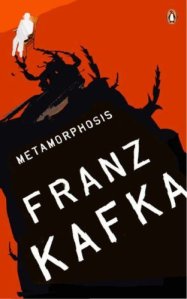 #9 The Metamorphosis by Franz Kafka
This was a fascinating little story. Gregor is inexplicably transformed into a giant insect at the beginning of the story – like first page beginning, Kafka wastes no time. He begins to panic about to work and then his family, whom he lives with, begins to worry about his unexpected behavior and not leaving his room to leave for work. It also seems like he’s apparently the breadwinner of the family, so they also begin to panic. Just a big ol’ panic-fest. During the story, his parents and his sister shun him and lock him away in his room like he’s the worst thing they’ve ever seen – no literally. Imagine your family thinking you’re abnormal and a disgusting little (or rather big) bug, and simply not worth their time.
Kafka demonstrates the themes of isolation and alienation as well as the demonizing of family and societal life as Gregor goes about his first day as a bug and then to be closeted by his closest relatives. As time goes on, his family has to now get their own jobs and take care of him, a task they all resent, and one his sister mostly does. They could care less whether he lives or dies and we are only given his perspective throughout all of this. We can only see his family through his creepy bug eyes, and yet, cannot help but feel pity for Gregor watching as his family doesn’t understand him anymore. I gave this another 5/5 with its messages of loneliness, cruelty, and neglect.
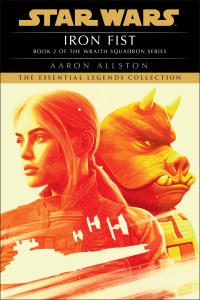 #10 Star Wars: X-Wing: Iron Fist by Aaron Allston
This is the seventh installment of the Star Wars: X-Wing series published in the late ‘90s. Within the series, it is book two of the Wraith Squadron series, featuring Wraith Squadron as they continue to work on taking down Warlord Zsinj, a maniacal imperial who is seen as one of the most powerful opponents of the New Republic. Some of the Wraiths were killed off in the previous installment and were replaced by three others at the beginning of this novel. The first of the major missions they undertake is posing as pirates to capture the attention of Zsinj, but in the process end up infiltrating an imperial base and stealing six TIE interceptors, which they then use to stage raids on imperial ground targets. Alongside this, Phanan and Face Loran go to Coruscant to recruit Gara Patothel, or rather Lara Notsil, her fake identity, who is a former imperial spy under Admiral Trigit (who died in Wraith Squadron – book 5), on terms that she help them expose New Republic Colonel Repness, who is supposedly requisitioning equipment on the black market.
We get some emotional hits in this book, after Ton Phanan is shot down during one of Zsinj’s ambushes, and Face goes to the ground to “rescue” Phanan, in denial that his only friend, or rather as Phanan’s only friend, is now dying in his arms. The scene was emotional and humorous as Phanan tends to have jocular dialogue whenever he’s in the scene. Later on, we begin to see the unraveling of romantic interests between Face Loran and Dia Passik, a new Twi’liek recruit, after a traumatic death of another new recruit.
I’ve been enjoyed Allston’s humor in the Wraith Squadron series – among all the turmoil, deaths, and dogfights, it helps to heighten the moral, if you know, you know. I gave this book 4/5 stars for its intricate storyline and well-placed humor – yub yub, commander!
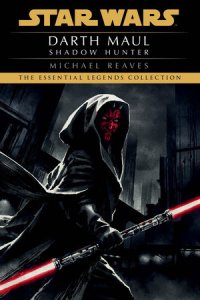 #11 Star Wars: Darth Maul: Shadow Hunter by Michael Reeves
This was another re-read for me. If you don’t know by now, I’m a big Star Wars geek. Always have been, and when I read a SW book I love, more often than not, I’ll return to re-read it at some point. I’ve done so with many of the SW books over the years. Here’s another one. Though, this one is surely a gem because, not only does Reeves write a gripping story about Maul in the underworld of Coruscant, but the audiobook is narrated by Sam Witwer. Of course, you probably don’t know who that is. If you do, congrats, you’re a nerd. He’s the voice actor for Darth Maul in the Clone Wars series, as well as both Maul and Emperor Palpatine in the SW Rebels series, and will be voicing Maul in his new animated show airing this year. So, of course, the performance in this book is stellar.
In the story, Maul is set on a quest by Darth Sidious to eliminate Hath Monchar, a Neimoidian who has obtained a holocron that contains secrets to bringing down the Jedi Order. Along the way, Maul encounters Lorn Pavan and his droid I-5, who are attempting to purchase the holocron from Monchar (whom Maul beheads) to live out their richest dreams. Jedi Padawan Darsha Assant is sent to the underworld of Corsucant for her Jedi trails to become a Jedi Knight. All of these cross paths, Pavan reluctantly goes along with Darsha as she attempts to ascend to the surface level, while Maul is on their tail, not letting any witnesses know of his Sith presence. Without spoiling, he is rather successful in his mission, even if it does take the entire novel.
I love getting to listen to Maul and Palpatine’s voices through Sam Witwer’s intense performance of them. Of all the audiobooks I listen to, few narrators have such a way of pulling me in. And for Reeves, as a writer, I can look for influence on he creates a disturbingly dingy ambience of the underworld of Coruscant, something I haven’t seen in many Star Wars novels. This is one of my 5 star Star Wars books! (A list of which I’ll make at some point)
Thank you for reading along. My hope is to inspire more and more readers across various genres. Farewell, and see you again this weekend!
T.P. Lanzarotto
21 January 2026
 T.P. Lanzarotto
Leave a comment